

eMalahleni Local Municipality is Eskom’s largest debtor!
Electricity minister Kgosientsho Ramokgopa has revealed that the eMalahleni Local Municipality is Eskom’s largest debtor as of 31 August 2026.
“As at 31 August 2026, eMalahleni Local Municipality is Eskom’s highest debtor with overdue debt of R13.6 billion,” Ramokgopa said.
“Municipal debt remains the single greatest threat to Eskom’s financial sustainability and the biggest obstacle to the legal separation of our distribution business.”
He added that Eskom anticipated that municipal debt would rise to R358 billion by its 2030/31 financial year if decisive intervention were not implemented urgently.
Ramokgopa explained that Eskom used various mechanisms to recover debts, including the Intergovernmental Relations Framework Act and National Treasury’s Municipal Debt Relief Programme. Other tools include Distribution Agency Agreements (DAAs), Promotion of Administrative Justice Act notices, the withholding of Equitable Share allocations, and negotiated payment arrangements.
“Some municipalities have entered into long-term payment arrangements to reduce their arrears while continuing to service their current accounts,” Ramokgopa said.
“Currently, 83 municipalities are subject to Eskom’s formal debt-recovery processes. Of these, 71 participate in the National Treasury’s Municipal Debt Relief Programme.”
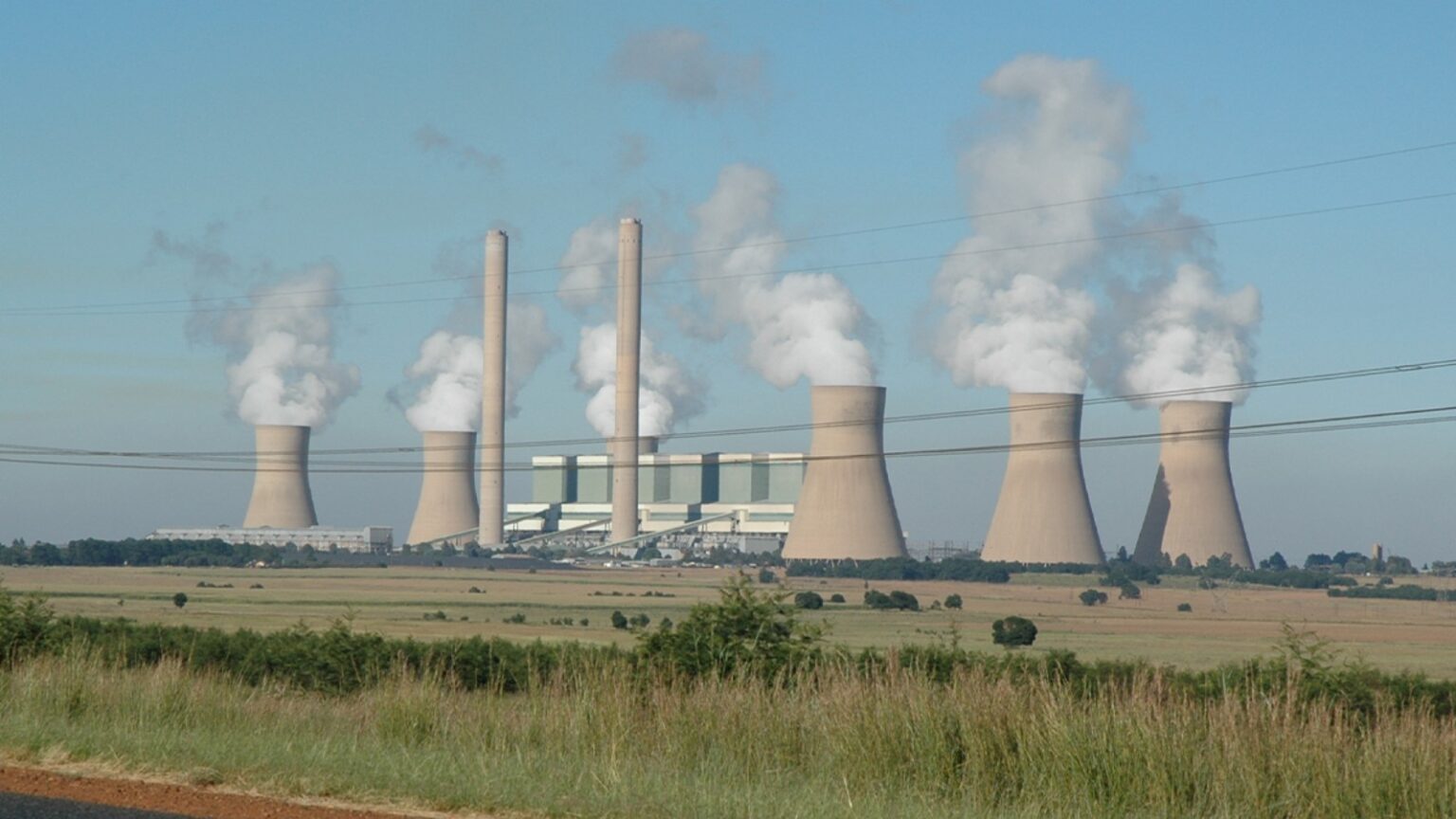
The eMalahleni municipality is home to numerous underground and opencast coal mines which feed six power stations in the region:
- Kendal Power Station — 4,116MW
- Matla Power Station — 3,600MW
- Duvha Power Station — 3,600MW
- Kriel Power Station — 3,000MW
- Kusile Power Station — 4,800MW
Some of these power stations were deliberately built in the area because of the availability of coal and water, which Eskom said made the region ideally suited for power generation.
Therefore, the eMalahleni Local Municipality sits at the heart of South Africa’s electricity system, with some of Eskom’s largest coal-fired stations clustered around coalfields.
61 towns and cities removed from Eskom Debt Relief Programme
In May 2026, Finance Minister Enoch Godongwana said National Treasury was in the process of removing all consistently defaulting municipalities from its Eskom Debt Relief Programme.
He confirmed that 61 of the 71 participants in the programme were consistently non-compliant with its requirements. They failed to approve cost-reflective tariffs, address the incompleteness in their rate base, enforce credit control, collect outstanding debts, and address losses. In addition, the municipalities had also consistently failed to enforce the national free basic services policy limits.
“These failures are directly under the control and influence of the respective municipal councils,” Godongwana said.
“National Treasury is in the process of terminating persistent defaulters from the programme to facilitate Eskom to collect the remainder of municipal debt relief over and above the post-debt-relief growth.”
He added that affected councils would be provided the opportunity to benefit from a debt write-off by signing a DAA with Eskom.
“In terms of the proposed DAA, it is envisaged that municipalities retain their electricity licences so that, after the five years of the DAA, they can take back a stabilised service,” the Minister said.
“The conditions for Eskom will be strengthened concurrently to force Eskom to collect from all municipalities as may be necessary.”
Godongwana said merely increasing the allocations to these municipalities would not help to address the challenges.
“Increasing fiscal allocations is likely to result in a further weakening of their will to address their failures and will further weaken collection efforts,” he said.
Godongwana said the National Treasury would continue to influence strong intervention in defaulting municipalities through their respective Provincial Executive Councils.