

Iron Rails and Power Houses: The Engineering Backbone of Witbank
Long before it became recognized as the modern energy capital of South Africa, Witbank was shaped by visionary infrastructure projects that turned a quiet Highveld resting place into an industrial powerhouse. From the arrival of the pioneering railway lines in the 1890s to the construction of landmark thermal power stations, the history of local infrastructure is a testament to extraordinary engineering grit and perseverance.
Laying the Tracks of Progress
In the late 19th century, the vast coal deposits embedded beneath the local landscape remained largely isolated until transportation could catch up with ambition. The turning point arrived when the railway line connecting Pretoria to the eastern frontier reached the Witbank district in 1894.
This vital rail connection transformed the region almost overnight, creating the famous ‘Witbank Line’ that fed the expanding gold mines of the Witwatersrand with essential fuel and connected the Highveld directly to the port of Maputo. Operating heavy steam locomotives and specialized coal-hauling rolling stock, generations of railway engineers and skilled operators established a heavy-transport corridor that remains foundational to the national economy.
Electrifying the Highveld
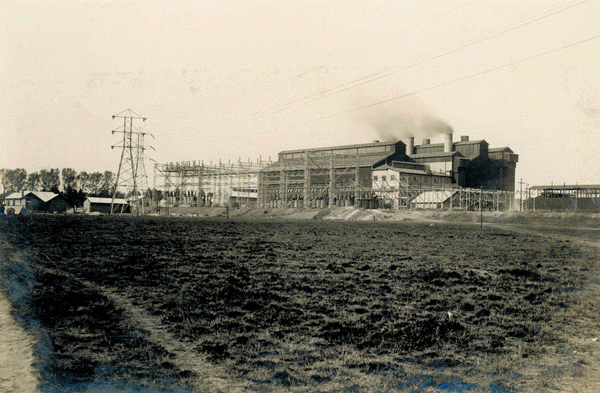
As industrial demands soared into the 1920s, the establishment of the historic Witbank Power Station (a major coal-fired base-load power plant commissioned in 1926) set a new national standard for municipal and regional electrification. Sited strategically amid rich coalfields and ample water resources, engineers harnessed local resources to generate affordable, dependable base-load power on an unprecedented scale.
This monumental achievement paved the way for subsequent engineering feats throughout the decades—including the massive regional power installations of the later 20th century—solidifying Witbank legacy as a masterclass in industrial infrastructure planning and execution.