

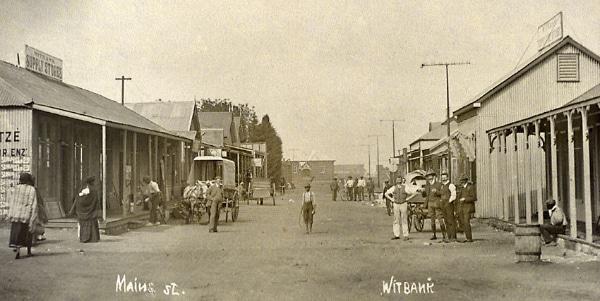
From White Ridge to Industrial Hub: The founding vision of early Witbank
Long before the sprawling steel mills and high-capacity power stations defined the skyline of Mpumalanga’s premier energy capital, the entire expanse of what is now Witbank was little more than rolling Highveld grasslands, marked only by a distinct white sandstone outcrop. The history of how this remote frontier evolved into a cornerstone of South African industry is deeply tied to the vision and tenacity of early European pioneers who recognized the monumental potential locked beneath the soil.
The Landmark Discovery of the ‘White Ridge’
The origin of the town’s original name dates back to the late 19th century, derived from the Afrikaans words for ‘white ridge’. Early transport riders and wagon drivers traversing the grueling routes between Pretoria and the eastern frontiers frequently used a prominent white quartz and sandstone outcrop—which famously loomed like a wagon tent across the distance—as a natural resting place.
However, the true catalyst for development arrived when early settlers and prospectors identified massive, easily accessible coal seams outcropping along local riverbeds. Among the key figures instrumental in transforming these raw mineral deposits into a viable commercial enterprise was British settler Samuel Stanford. Partnering with mining financier Sigismund Neumann in the mid-1890s, Stanford helped establish the foundational Witbank Colliery, laying the groundwork for systematic resource extraction.
Iron Rails and the Birth of a Municipality
Despite the presence of rich coal reserves, early attempts at large-scale industrial exploitation remained constrained until the arrival of modern infrastructure. The definitive turning point came in 1894, when the railway line from Pretoria was successfully extended to the district. This vital connection linked the Highveld directly to the booming gold mines of the Witwatersrand and the eastern ports, turning a transient mining camp into a permanent settlement.
By 1903, the layout of the official township was formally established by the colliery company, featuring its very first wood-and-iron structures, trading stores, and hotels. What began as a strategic staging post on the Highveld rapidly burgeoned into a proclaimed town and later a thriving municipality, driven forward by the collective enterprise of skilled engineers, artisans, and merchant families.
Today, the legacy of these early developmental milestones endures across Witbank, serving as a powerful reminder of how foresight, grit, and industrial pioneering built a modern city from a quiet ridge on the South African veld.