
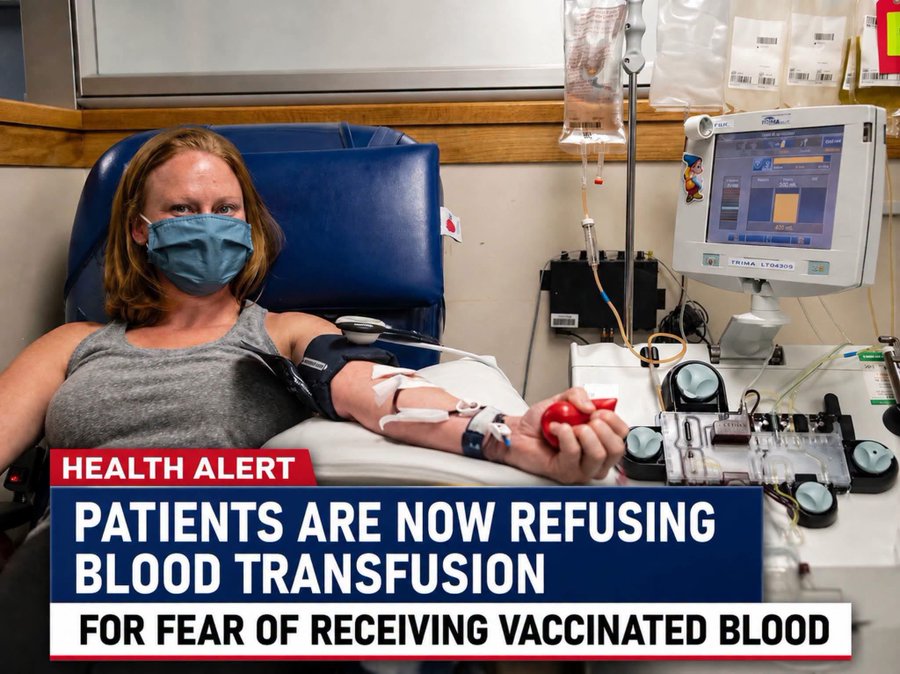
Decoding the Post-Pandemic Blood Mystery: What Are Scientists Actually Finding?
In the years following the global COVID-19 rollout, the intersection of public health, social media, and scientific investigation has sparked intense debates. Alongside official health campaigns, alternative digital spaces filled up with claims from independent commentators, funeral directors, and fringe groups asserting that medical professionals were pulling bizarre, fibrous, rubbery structures out of the veins of vaccinated individuals.
For anyone trying to navigate the noise, it raises a compelling question: Amid all the post-pandemic skepticism and vaccine scandals, what are legitimate doctors, pathologists, and researchers actually finding when they look at vaccinated blood?
The Viral Claims vs Medical Reality
The narrative of ‘weird stuff’ in the blood largely exploded with viral online content—most notably independent video projects featuring embalmers claiming they were pulling strange, rubber-like clots from bodies. These presenters suggested a widespread, sinister anomaly.
However, mainstream pathologists, hematologists, and mortuary associations stepped forward with a much more grounded, procedural explanation. According to forensic experts and medical bodies, the unusual-looking masses often highlighted online are standard postmortem clots (clots that naturally form inside blood vessels after death) or blood affected by prolonged refrigeration and the chemical preservation process of embalming fluids (which coagulate proteins). They are frequently found in deceased individuals regardless of their vaccination status.
Where Science Found Real Answers: The VITT Breakthrough
While viral internet theories often missed the mark, dismissive medical attitudes early on also hindered clear communication. The truth is that independent scientists, immunologists, and pathologists did find real, rare, and deeply puzzling blood anomalies tied to specific types of COVID-19 vaccines—sparking years of intensive, peer-reviewed detective work.
The most notable phenomenon investigated by the medical community is VITT (Vaccine-Induced Immune Thrombocytopenia and Thrombosis). Primarily associated with early adenovirus-vector vaccines (such as those developed by Oxford-AstraZeneca and Johnson & Johnson) rather than mRNA shots, VITT caused severe, unusual blood clots paired with a sharp drop in platelets.
For a long time, the exact biological trigger baffled specialists. However, landmark international studies—including comprehensive molecular research published in leading medical journals—finally cracked the case:
- The Immune System Mix-Up: Researchers discovered that in an extremely small fraction of recipients, the body’s immune system accidentally confuses a normal viral protein found in the vaccine carrier with a human blood protein called platelet factor 4 (PF4). Interestingly, scientists found that natural infections with common cold adenoviruses can occasionally trigger the exact same rare mechanism.
- Molecular Mimicry: This rare biological cross-reaction causes the body to produce autoantibodies that mistakenly attack PF4, triggering aggressive and dangerous clotting. Interestingly, scientists found that natural infections with common cold adenoviruses can occasionally trigger the exact same rare mechanism.
- Lessons for the Future: Pinpointing this exact genetic and structural trigger has given vaccine developers a clear blueprint to modify future technologies, ensuring that vector-based platforms can completely engineer out this rare risk.
Navigating the Divide
The post-pandemic landscape remains fraught with tension because public trust was severely strained.
On one side, public health institutions were slow to acknowledge and openly investigate rare adverse events, creating an information vacuum. On the other side, sensationalized claims often amplified unverified observations into sweeping conspiracies.
Ultimately, medical science operates by moving past both panic and denial. Pathologists and researchers did find unusual and dangerous reactions in a small subset of cases—and by rigorously investigating them, they turned a mysterious medical puzzle into a solved biological mechanism.