

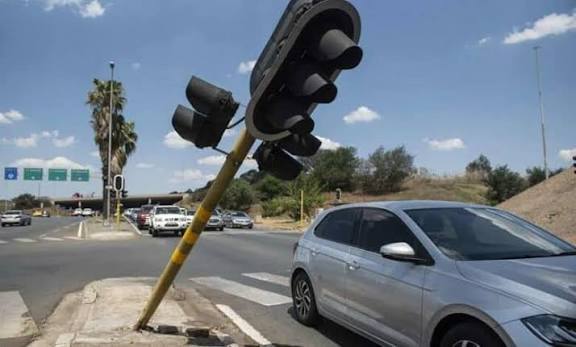
Navigating the invisible maze: faulty robots, faded lines, phantom speed humps and missing stop signs
Driving through Witbank after dark or during rush hour has evolved into an exercise in high-stakes survival. Beyond the infamous craters and road-chewing trenches that dominate local headlines, motorists face a compounding invisible hazard: a complete breakdown of traffic controls, dead robots, vanished street markings, missing road signs, and unmarked speed humps that catch drivers entirely off guard.
The Dead-Robot Dance and Vanished Signage
When approaching major intersections across suburbs or the central business district, local drivers are routinely greeted by unpowered, flashing, or entirely dark traffic lights. Fueled by rolling grid failures, electrical cable theft, and prolonged municipal maintenance backlogs, these dark intersections transform standard morning commutes into chaotic games of mutual guesswork and polite four-way-stop etiquette—frequently resulting in dangerous near-misses during peak hours.
Compounding the intersection chaos is the condition of roadside infrastructure. Essential directional boards, yield indicators, and stop signs have either been stolen for scrap metal, vandalized, or faded beyond recognition under the blazing Highveld sun. For visitors or drivers navigating unfamiliar routes at night, finding a clear signposted direction feels like a treasure hunt with no map.
The Invisible Traps: Faded Lines and Camouflaged Speed Humps
Daylight offers little relief, exposing a road surface stripped of its basic visual language. Decades of wear and tear, coupled with a lack of repainting, mean that lane dividers, pedestrian crossings, and yellow edge lines have completely faded into the worn asphalt. During a sudden Highveld thunderstorm, the lack of reflective road markings turns driving into a blind navigation exercise where motorists can only guess where their lane ends and oncoming traffic begins.
Adding insult to injury are the neighborhood speed humps. Originally installed to curb speeding and protect children near schools and residential parks, many of these traffic-calming ridges have worn down to match the asphalt, lost their warning paint, or blended seamlessly into the gray road surface. Without any reflective signage or painted white stripes to warn approaching motorists, hitting an unpainted speed hump at standard speed delivers a brutal shock to any vehicle’s suspension—sending flying coffee cups, rattled teeth, and stressed shock absorbers through cabins across the city.
Community Vigilance on the Asphalt
Despite the frustrating maze of missing controls and camouflaged hazards, residents continue to adapt through sheer localized ingenuity. Community safety groups coordinate to manage chaotic intersections manually during peak grid failures, while neighborhood associations occasionally take to painting their own DIY warning markers or placing reflective warnings near hazardous humps.
The struggle for visible, functioning road controls highlights yet another layer of daily perseverance on the Highveld—proving that while municipal infrastructure may falter, the collective watchfulness of local motorists keeps the wheels turning.