

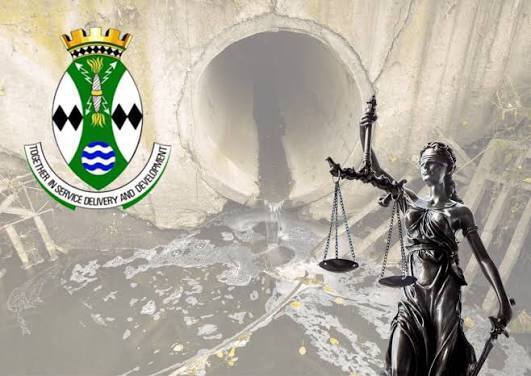
The R650 Million Indictment: Witbank’s Record-Breaking Sewage Disgrace
In what legal experts and environmental watchdogs have branded a staggering national indictment of municipal governance, the eMalahleni Local Municipality was slammed with a record-breaking R650 million fine by the Mpumalanga High Court. The penalty followed the municipality’s formal guilty plea to multiple environmental offenses after years of systematically allowing raw, untreated sewage to pour into the region’s primary water systems.
A Catastrophic Ecological Trail
The landmark court ruling exposed a six-year period of severe infrastructural negligence spanning from March 2019 to March 2025. Intensive investigations by the national Green Scorpions and Blue Scorpions revealed that broken pump stations, overflowing manholes, and collapsed wastewater treatment works—including the Klipspruit, Riverview, and Ferrobank facilities—had discharged millions of liters of raw sewage unchecked into the environment.
The contamination directly choked critical local water arteries, turning vital ecological zones into toxic sludge. The pollution heavily impacted:
-
The Witbank Dam
-
The Naauwpoort River
-
Steenkoolspruit and the Klein Olifants River
- Industrial and residential boundaries, eventually feeding downstream into the broader Olifants River system
State prosecutors emphasized during the proceedings that the systematic pollution posed severe public health hazards, devastated local ecosystems, and caused massive economic fallout for communities relying on the catchment areas.
The Fine and the Mandate to Repair
Under the High Court order, the R650 million sentence includes a R150 million portion suspended for five years on condition that the municipality commits no further pollution violations. Crucially, R500 million of the fine is legally ring-fenced and directly mandated for the urgent rehabilitation, structural repair, and total overhaul of Witbank’s chronically dysfunctional wastewater infrastructure, with strict compliance deadlines stretching toward 2031.
While civil society groups and water justice initiatives welcomed the historic ruling as a long-overdue step toward accountability, it remains a stark, shameful chapter for the City of Coal—underscoring how years of administrative collapse and deferred maintenance turned the region’s natural lifelines into an environmental disaster zone.