

Surviving ICU – Do we go there to Die?
Having lost my dear mother suddenly dying in ICU; I started questioning why? She seemed to be only getting worse in ICU until she died. From others that I’ve heard from; my perception of people going into ICU was, that they go there to die. So I started looking into this for the purpose of confirming my suspicion.
The reality is…
Focusing specifically on Witbank; critical care capacity is split between the public sector (Witbank Hospital) and private healthcare facilities (such as Life Cosmos Hospital and eMalahleni Private Hospital).
The notion that ‘most people go into ICU and few leave alive’ is a misconception. Broadly speaking, local and national data demonstrate that the majority of patients admitted to South African ICU’s survive their stay and leave alive (typically ranging between roughly 74% to 85% survival rates, depending on whether it is a private or public facility and the severity of the illness).
Looking closer at how critical care functions in Witbank:
1. Local ICU Facilities
-
Life Cosmos Hospital: Features a substantial critical care setup, including a 25-bed Medical ICU, a 10-bed Surgical ICU, and a dedicated burns unit.
-
eMalahleni Private Hospital: Operates a 24-hour intensive care unit equipped with multi-organ support and isolation rooms.
-
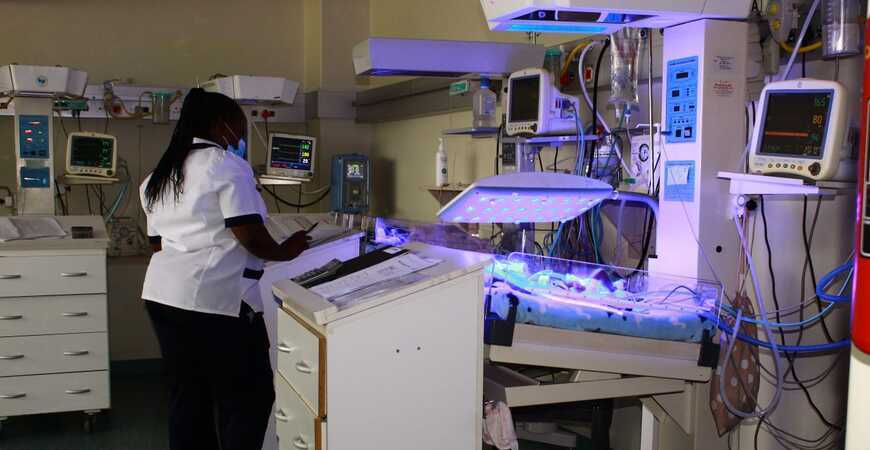
Witbank Hospital (Public Sector): Manages regional public health critical care demands, including specialised high care and neonatal ICU capacity.
2. Understanding the Mortality vs. Survival Ratio
-
The Survival Side: Multi-centre studies evaluating South African ICU cohorts consistently show in-ICU mortality rates spanning roughly 11% to 26%. This means that roughly 74% to 89% of patients successfully walk out or are discharged alive from the ICU unit.
-
Why it can feel like a low survival rate: Because ICUs handle the absolute sickest patients—those suffering from severe trauma (such as vehicle accidents on the N4 or local mining/industrial incidents), acute medical crises, or advanced systemic infections—families often associate the unit with high-stress outcomes. Furthermore, strict triage protocols in South Africa mean beds are heavily rationed; patients who are deemed “too well” are kept out, and those admitted are critically ill, which naturally concentrates severe outcomes in one ward.
-
The Triage Factor: In regions with constrained public health resources like Witbank eMalahleni, strict bed-rationing protocols mean that ICUs admit only the most critical, life-threatening cases where intensive intervention is strictly necessary. This filtering naturally concentrates the highest-risk patients into a single unit, making the statistical reality a daily battleground where clinical teams fight to preserve that majority survival margin.